
GDC Releases for Barrow Cases
The county and state records also use different time frames. Barrow documents its own booking and departure. GDC can retain the state offender history after prison release. That makes GDC the better follow-up when a state sentence is documented, even though the county record remains useful for tracing how custody began.
Barrow County's detention description says the local jail can hold sentenced people waiting for state or federal transfer. That fact prevents a common mistake. A person who vanishes from the county roster after transport to GDC has left Barrow custody, but remains incarcerated. Confirm the receiving system before treating the event as a community release.
PO Box 1529
Forsyth, GA 31029
(404) 656-4661
Written verification and inmate questions
A person may leave Barrow County Detention Center because GDC took custody. That is a transfer, not community release. Search GDC when the jail detail or sentencing order shows state time, a felony prison sentence, or transfer to state custody. Local jail-only releases normally have no GDC record.
State release may occur on parole, probation, or maximum release. A GDC status and date describe the state path. The Barrow court record still explains the sentence that began it.
Search GDC Release Records
Name-only results require care. Use a GDC ID or case number when available, then compare the physical description and case facts. A person with a Barrow arrest may never have entered GDC custody. Conversely, a state sentence may place the controlling release record in GDC even though the case began at the county jail.
The GDC Find an Offender service accepts description, name, ID, or case number.
- Open Find an Offender.
- Search by the strongest known identifier.
- Compare name, description, case, and facility facts.
- Read custody and release fields in context.
- Check parole tools if parole may apply.
- Request written verification when needed.
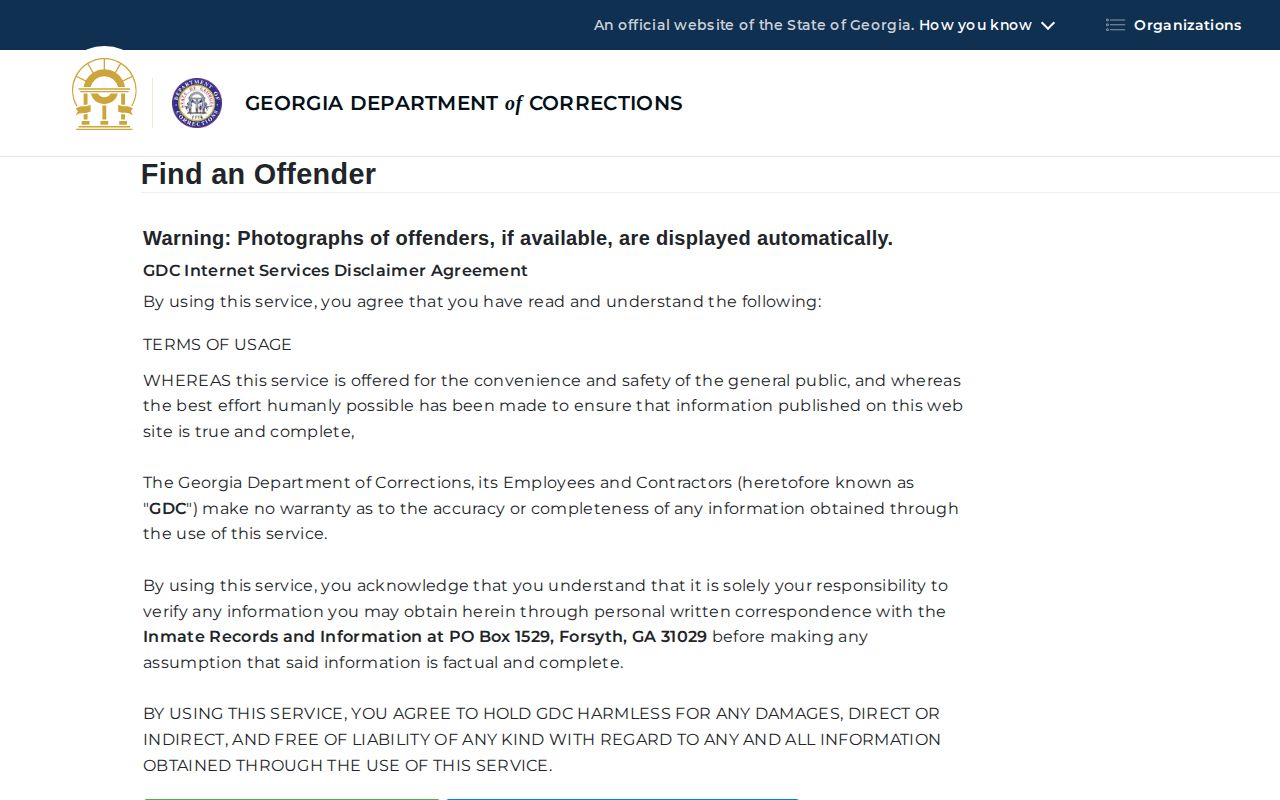
The image shows the official statewide entry point, not the Barrow jail inquiry.
GDC Release Field Meanings
A Tentative Parole Month is the month set for final parole consideration. It is not a release appointment. The parole board may postpone or cancel it because of misconduct or unmet conditions. A Performance Incentive Credit date can affect consideration under GDC policy, while the maximum release date comes from sentence computation. Only an actual release status establishes that GDC incarceration ended.
Parole means conditional community release before the sentence fully expires. Maximum release means the custodial term reached its computed endpoint. Discharge can refer to the end of a correctional or supervision obligation. Read the exact status rather than using these terms as substitutes.
Georgia timing can include parole eligibility, a Tentative Parole Month, Performance Incentive Credit Date, maximum release date, and actual release. Eligibility does not mean release. A TPM marks a final-review month and may be postponed or cancelled for misconduct or unmet program conditions.
| Term | Meaning |
|---|---|
| TPM | Tentative review timing, not a promise. |
| PIC date | Possible earlier consideration under GDC policy. |
| Maximum release | Sentence-computation endpoint. |
| Parolee record | Post-release parole status. |
Verify GDC Barrow Releases
For parole timing, use the State Board's TPM explanation and parolee database. For supervision after release, use the Department of Community Supervision. DCS and the parole board answer post-custody questions; they do not replace the GDC incarceration record.
Barrow court records remain part of the chain because the sentencing order explains why state custody began. Match the county case to the GDC identity before drawing a conclusion. If the record instead shows a county sentence of one year or less, the local jail route may remain controlling.
GDC warns that public information may be incomplete and directs written verification to Inmate Records and Information, PO Box 1529, Forsyth, GA 31029. GDC general mail is 300 Patrol Road, Forsyth, GA 31029, and the documented inmate-questions number is (404) 656-4661.
After release on parole, search the State Board of Pardons and Paroles parolee database and use DCS Winder for field-supervision questions. The Barrow sentencing order remains useful. The Barrow County release guide separates county and state sources.
GDC Release Cards
The GDC release-card information page documents this state process.
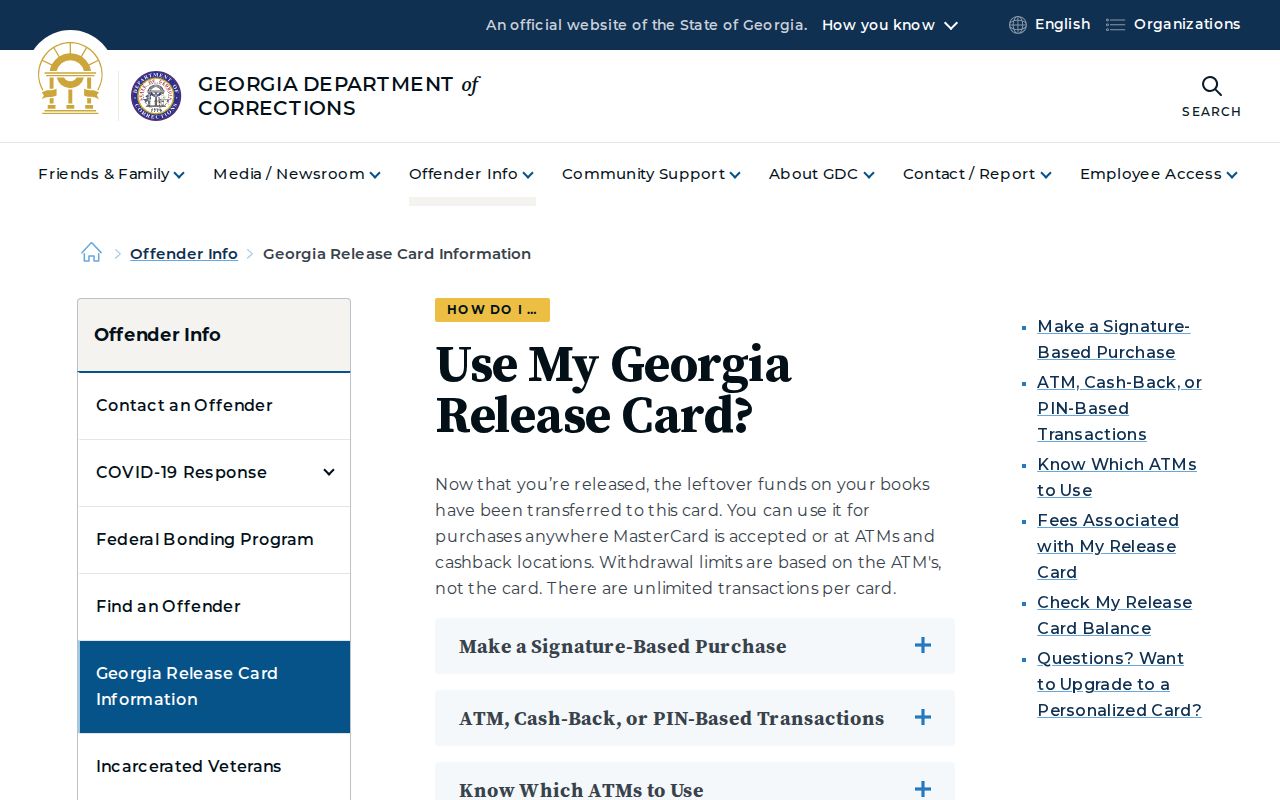
The release card can help the person leaving state custody, but it is not a public certificate that replaces the offender search, parole record, or court order.
GDC policy says a correctional release card is completed for each offender leaving GDC on parole, probation, or maximum release and issued on release day. It can contain name, address, ID number, photograph, physical description, birth date, issue date, and expiration date. This is an operational state-release document, not a public web lookup and not a Barrow jail card.
Barrow Holds and GDC Transfers
A complete state-release check records four points: the Barrow departure, the GDC identity, the actual state status, and any supervision that followed. The county event says when local custody changed. The statewide result says whether the person entered or left GDC. The parole or DCS source says whether a community condition remains. No single field should be stretched to answer all four questions.
When dates conflict, note the source and what each date represents. A booking date, county release date, projected state date, tentative parole month, and actual discharge date can all be valid because they mark different steps. Written GDC verification is the best next move when the public entry is unclear. The Barrow sentencing order can resolve which conviction and term belong to the matched offender.
Barrow's Criminal Alien Tracking and Reporting page is a distinctive local source on detainers. It includes quarterly reporting links and describes cooperation with federal immigration authorities. The page is not an individual locator, but it supports the warning that release from one charge can become transport to another custodian.
Check the federal release route only when a federal custody path is documented, and use the ICE detainee route only when a notice or record identifies immigration custody. A failed search in either system does not erase the GDC or Barrow record.
Barrow's local immigration-reporting material explains that a release from one authority can become transfer to another. The same caution applies when local custody becomes GDC custody. Confirm the destination before saying the person went home.
A detainer is a hold or request from another authority. Court orders, new warrants, federal custody, or immigration custody can change the next step. Search the controlling system and preserve the transfer distinction.